Review: Everything, Everywhere, All at Once
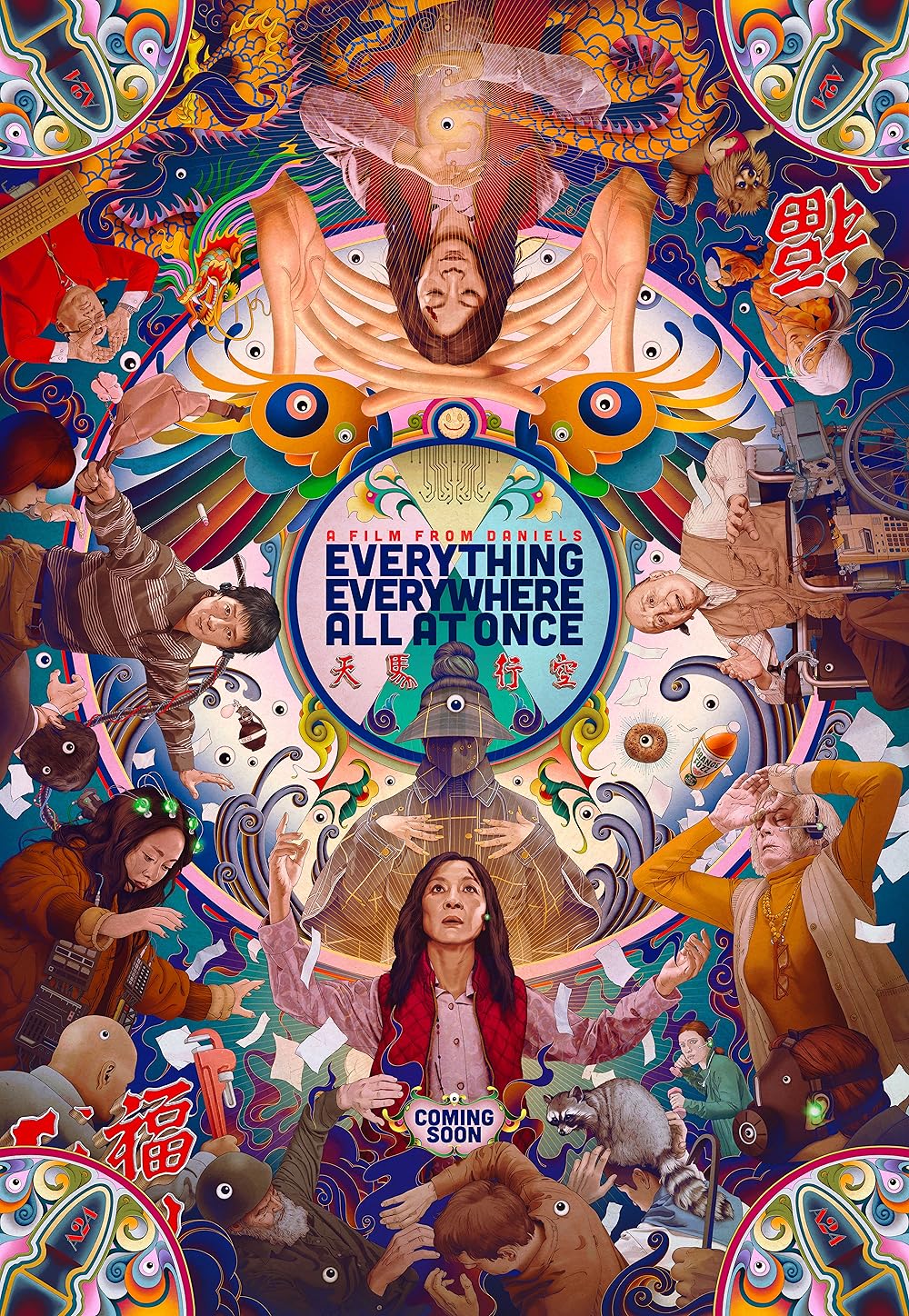
Ever watched a movie so peculiar and random, yet oddly charming and meaningful? For me, the Academy Award-winning film Everything, Everywhere, All at Once was just that. This film starring actors Michelle Yeoh, Ke Huy Quan, and Stephanie Hsu lives up to all of its fame and hype. The acting, storytelling, and plot are phenomenal and led me to recently rewatch the film over winter break. I can’t give the entire movie justice in just a few lines, but if I had to: the movie tells the story of a slightly dysfunctional immigrant family who seeks a chance to make things better for themselves, but when they are given that chance (with the aid of alternate universes), things do not go as planned. Secrets are uncovered, grudges are brought to the surface, and long-due amends are finally made.
The film delves into fascinating topics such as changing relationships, the immigrant experience, and overcoming regret. The relationship between antagonist Joy (also known as Jobu Tupaki) and her mother Evelyn (who happens to be the protagonist…see where this is going?) was especially fascinating to me. To save her relationship with her daughter Joy, Evelyn has to overcome her discomfort with same-sex attraction. This dynamic relationship captures lots of raw emotion amongst the two complex characters and displays the film’s authenticity in conveying the experiences of second-generation immigrant children. I found it beautiful that though the two shared a stark difference in ideologies due to their generational gap, the outlet of empathy was able to bridge that gap smoothly. What’s most important to note is that this complex relationship, alongside all of the other character dynamics, would not be as special if it weren’t for the entire cast’s magnificent acting. I came across Hsu’s interview for the movie online and was left amazed by how easily she was able to portray herself as a rather unique character.
The cinematography and directing of the film were nothing short of its marvelous themes and acting. I enjoyed the idea of breaking the film into three parts (hence the title) and the use of a gradual buildup of chaos to the final “all at once” stage. This strategic organizing created anticipation for what was to come next. Moreover, the idea of using concepts that seem silly or childish (like googly eyes or a bagel) as symbols of much larger meaning made the film more digestible for a broader audience. The depiction of alternate universes in a film is a hard task that requires creative imagination and the cinematographers did not disappoint. The frames that showcased the shifts between parallel universes were executed incredibly well and the one scene where Evelyn shifts between nearly a hundred universes within a few seconds was a beautiful shot to witness. Even though some of these scenes lasted for merely seconds, their effect was far beyond that limited duration.
All in all, the film was an artistic delight to experience and I would strongly recommend it. I do have to admit that the film is rather strange (not Saltburn strange–that’s for another day) and very all over the place at times but if you’re into analyzing peculiar elements, it’s made for you!


Comments
Post a Comment